Showing posts with label Tchaikovsky concerto. Show all posts

Saturday, September 4, 2021

Linus Roth

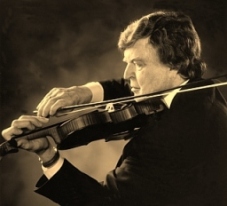
Linus Roth is a German violinist born (in Ravensburg, Germany) on May 31, 1977.  (Ravensburg is about 100 miles west of Munich)  In addition to his brilliant technique and uncompromising musicianship, he is known for having saved Polish composer Mieczyslaw Weinberg from oblivion.  From age 15, Roth has been the recipient of many top awards at various violin competitions.  Roth has also won the ECHO KLASSIK Award twice for his recordings under the EMI and Challenge Records labels.  (The ECHO KLASSIK is Germany’s top classical music award.)  In 2013, Roth received Gramophone music magazine’s Editor’s Choice honors for his recordings of Weinberg’s violin concerto, the Concertino for violin and chamber orchestra, and the complete works for violin and piano.  Every Roth recording is easy to find on the internet.  Among many other works, Weinberg also composed three sonatas for solo violin which Roth has also recently recorded.  Although he has spent most of his career in Europe, Roth has played in venues across the world, including North and South America and the Far East.  As is customary for many classical concert artists, he also plays chamber music (in concert) with a wide variety of world class musicians.  Roth began violin lessons at age 5.  He received his first instruction from his mother, who is a cellist.  At age 6, he made his first public appearance.  His first solo performance with orchestra, at which he played the Mendelssohn concerto (the one in e minor), took place at age 11.  The following year, he began lessons in Zurich with Ukrainian-Polish violinist Nicolas Chumachenco, well-known violin pedagogue.  Four years later, at age 16, he began studying with Russian violin Professor Zakhar Bron, in Lubeck, Germany.  (Bron was also the teacher of Vadim Repin, Maxim Vengerov, Mari Samuelsen, and Daniel Hope.)  Beginning at age 20, he started lessons with someone who would become his most influential teacher, Ana Chumachenco, first in Zurich, then in Munich.  (Ana Chumachenco is Nicolas Chumachenco’s sister.)  In 2012, Roth was appointed violin professor at the Leopold Music Center of Augsburg University where he still teaches.  In 2018, he established the Ibiza (Spain) music festival called Ibiza Concerts.  (Ibiza is an island off the eastern coast of Spain – a very short trip by airplane, but a long trip by ferry.)  Toward that end, he is learning Spanish – he already speaks German, English, and Italian.  He also was appointed Artistic Director, in 2020, of the Spring Music Festival at Ochsenhausen, Germany.  (Ochsenhausen is about 60 miles west of Munich.)  I believe all of their concerts will be streamed live in 2021, although I’m not absolutely sure about that.  Up until the end of 2019, Roth maintained an incredibly busy concert schedule.  However, his schedule was disrupted by events which took every artist around the world by surprise.  Not one single artist was spared the consequences of the worldwide events which resulted from the severe Covid-19 pandemic.  However, Roth wisely spent some of his time off doing a lot of recording that does not require an orchestra, including the six works for solo violin by Bach.  I do not know if any of those CDs have been issued yet.  Fortunately, as his website shows, an upcoming concert tour with Anne-Sophie Mutter as partner will relaunch his concert itinerary.  In a recent interview, Roth was asked which two musicians from the past he would most like to meet; his choices were composer Ludwig Van Beethoven and conductor Carlos Kleiber.  Beethoven is not an unusual choice, but Carlos Kleiber is.  As far as I know, Kleiber never appeared with or conducted for any soloists on stage.  His concerts were all-orchestral concerts or operas; same as his recordings.  Nevertheless, many widely-respected musicians (and many music critics) regard him as the best conductor of the twentieth century.  Roth has stated that he “wouldn’t want to discuss anything musical with him; rather, I would ask him about his views on life, spiritual things, and about the aura of certain other people he worked with.  I’m sure he felt these intensely.  In case we would have managed to have some glasses of wine together, I would ask him about his youth in South America, the atmosphere there, and his feelings about coming back to Munich in 1952 to be Korrepetitor [an opera singer’s coach and accompanist] at the Gärtnerplatz Theater München.”  As for Weinberg, Roth first discovered his music in 2010 (one source says 2011.).  He has championed Weinberg’s music ever since and founded (in 2015) the International Mieczyslaw Weinberg Society which promotes Weinberg’s music.  Weinberg’s violin concerto was dedicated to Leonid Kogan, who recorded it in 1959 or 1960.  Here is a YouTube video with Roth speaking briefly about the concerto, including footage of his recording session in Berlin in August, 2013.  Unlike most concert violinists, Roth is not a chess player (he prefers backgammon), but in a matter of a few months, he will join Kristof Barati and Jeremy Constant as being one of the extremely rare people who are both concert violinists and airplane pilots.  Roth maintains his mental and physical stamina by regularly working out at a gymnasium.  (Arabella Steinbacher practices Yoga but, as far as I know, never sets foot in a gym.)  Here is a YouTube video with Roth playing the Bach E major concerto.  Be prepared to experience a very special and unexpected ending to that video.  Here is another fascinating video showing a rehearsal for the recording session of the Tchaikovsky concerto with the London Symphony.  Since 1997, Roth has played the 1703 Dancla Stradivarius, although he played many other violins before that, including a Landolfi of unknown date.  The photo is courtesy of Belgian Photographer Diego Franssens.  

Sunday, December 8, 2013

Sergey Krylov

Sergey Krylov is a Russian violinist, teacher, and conductor born (in Moscow) on December 2, 1970.  A bit of trivia about Krylov’s life is that his father was a violin maker (luthier), a rarity in Russia because Russian violin makers are few and far between, for reasons I know nothing about.  For hundreds of years (1550-1950), the overwhelming majority of violins were produced in Europe and nowhere else.  Another bit of trivia is that none other than (cellist) Mstislav Rostropovich was supposed to have declared Krylov to be one of the top five violinists in the world.  You can judge for yourself in this YouTube video – you can hear a pin drop in the immense audience which you can sense is simply spellbound.  Krylov began violin lessons at age 5.  A year later, he played his first public concert.  He entered the Central School either in Moscow or Kiev (a well-known music school for gifted children) at age 10.  His teachers there were Abram Shtern and Sergey Kravschenko.  His first recording came at age 16 on the Melodiya label, the official (government) Russian label at the time, with the Lithuanian Chamber Orchestra, which resides in Vilnius, city where Jascha Heifetz was born - Krylov would much later (2008) be appointed conductor of this orchestra.  After winning a violin competition in Italy at age 18, he began studying with Salvatore Accardo.  He later won another competition in Cremona, Italy, and still another in Vienna.   By that point, Krylov had begun his concertizing career, spending most of his time in Russia and Europe.  His playing has been described as “hypnotic.”  His articulation is very clean and reminds me of Leonid Kogan’s although Krylov’s sound is much sweeter than Kogan’s.  If you feel so inclined you can hear and see his performance of the Tchaikovsky concerto here.  My favorite recording of this work is Tossy Spivakovsky’s but Krylov’s certainly comes in a close second.  He has also participated in countless chamber music concerts throughout the world with a diverse group of musicians, including Maxim Vengerov, Mischa Maisky, Nobuko Imai, Yefim Bronfman, and Yuri Bashmet.  In 2012, he became part of the music faculty at the University of Music and Art in Lugano, Switzerland.  His recording labels are EMI, Agora, and Melodiya.  He has played the Scotland University Stradivarius of 1734 but I don’t know if he is presently playing that particular violin.  

Thursday, September 6, 2012

Adolph Brodsky

Adolph Brodsky (Adolph Davidovich Brodsky) was a Russian violinist, teacher, and conductor born (in Taganrog) on April 2, 1851.  He is perhaps best known as the violinist who premiered Tchaikovsky’s difficult violin concerto after Leopold Auer turned it down because he found it unplayable.  Although he spent three years in the U.S., his career began and ended in Europe.  His grandfather and father (David) were both violinists and he is said to have begun his lessons at age 4 in his hometown.  At age 9, he played a concert in Odessa (Russia-Ukraine) and was subsequently sponsored by a wealthy patron, to continue his studies in Vienna, at the Vienna Conservatory, with Joseph Hellmesberger (the elder.)  For a time, Brodsky played second violin in the Hellmesberger Quartet, said to be the first string quartet that actually bore a specific name.  In addition, from 1866 to 1868, Brodsky played in the Imperial (Vienna) Court Orchestra.  He was 15 years old.  In 1870, at about age 20, he left Vienna to tour as a concert violinist.  He settled in Moscow in 1873 where he obtained a teaching position at the Moscow Conservatory in 1875.  He held this post until 1878.  On December 4, 1881, he premiered the Tchaikovsky concerto in Vienna with Hans Richter conducting.  He was 30 years old.  Although initially dedicated to Leopold Auer, the dedication was re-assigned to Brodsky.  Nevertheless, Auer subsequently learned the concerto and taught it to his young pupils, one of which was Jascha Heifetz.  Tchaikovsky was not present at Brodsky’s premiere performance although he later attended a concert in Leipzig (in 1888) in which Karl Halir was the soloist and was extremely pleased with the concerto.  From 1883 to 1891, Brodsky taught at the Leipzig Conservatory.  It was here that Brodsky formed the Brodsky String Quartet with Ottokar Novacek, Hans Sitt, and Leopold Grutzmacher.  It was also at Brodsky’s home that Tchaikovsky, Edvard Grieg, and Johannes Brahms met (all at once) for the first time.  Though Brahms advised against it, in 1891, Brodsky accepted a position as concertmaster of the New York Symphony (for which Carnegie Hall was built), playing under Walter Damrosch.  Brodsky returned to Europe in 1894.  Some sources say he returned in 1895.  He was 43 years old.  After spending some time in Berlin, he was invited to England (by Charles Halle) to teach at the Royal Manchester College of Music and to lead the Halle Orchestra as concertmaster.  It was here that he changed his name from Adolf to Adolph.  From 1895 until his death in 1929, Brodsky taught and was Director at the Royal College.  He also occasionally conducted the Halle Orchestra.  It is said that he was one of the first automobile owners in town.  While in Manchester, Brodsky re-established his string quartet with Rawdon Briggs, Simon Speelman, and Carl Fuchs.  In 1919, Edward Elgar wrote and dedicated his Opus 83 string quartet (in e minor) to this new Brodsky Quartet.  In 1927, Brodsky played the Elgar violin concerto with the Halle Orchestra with Elgar on the podium.  He was 75 years old.  For 17 years (1880 to 1897) his violin was the LaFont Guarnerius of 1735, for many years now played by Nigel Kennedy.  Brodsky, who was also a chess player, died on January 22, 1929, at age 77.  Other than Naoum Blinder (Isaac Stern's teacher), I don’t know if he had any famous pupils.  

Sunday, March 11, 2012

Karl Halir

Karl Halir (Carl Halir) was a Czech violinist, teacher, and composer born on February 1, 1859.  In his day, he was famous for his interpretation of the Beethoven concerto.  However, he is also remembered for having played the first performance of the revised version – the version now commonly heard today – of the Sibelius concerto.  He was also a very tall man with an imposing presence, as were August Wilhelmj and Erick Friedman (and is Arnold Steinhardt.)  It has been said that in his hands, the violin looked like a toy.  His father was his first violin teacher.  At the Prague Conservatory he studied under Antonin Bennewitz (teacher also of Josef Suk and Otakar Sevcik) and later (from age 15) with Joseph Joachim in Berlin, at the Advanced School for Music.  Upon graduation, Halir joined Benjamin Bilse’s Band in Berlin, the precursor of the Berlin Philharmonic.  He was either the concertmaster of this band or played among the first violins.  I do not know for sure.  He was concertmaster also of the orchestra at Konigsberg in 1879.  He was 20 years old.  Two years later, he became concertmaster in Mannheim and remained for 3 years.  One source states that after Konigsberg, he spent two seasons in Italy as part of the private orchestra of a Russian nobleman.  In 1884, he was appointed concertmaster of the orchestra in Weimar (Grand Ducal Court Orchestra) and was there for 10 years (1884-1894.)  That same year, as part of the Bach Festival, he and Joachim played the Bach concerto for two violins in Eisenach to great acclaim.  He was 25 years old.  Joachim was more than twice his age.  Halir much later (in 1897) joined Joachim’s string quartet as second violinist – the quartet had originally been formed in 1869.  After Joachim’s death, Halir formed his own quartet.  After leaving the Weimar orchestra in 1894, he became concertmaster of the Berlin Court Opera orchestra and teacher at the school from which he had graduated (the Hochschule fur Musik) – he taught there until the day he died.  In Berlin, he also formed a piano trio which included pianist George Schumann and cellist Hugo Dechert.  All the while, he continued his solo concerts and recitals.  In 1888, Halir played the Tchaikovsky concerto in Leipzig.  Tchaikovsky was at the performance and was so impressed with the concert he later described it as a memorable day.  In 1896, Halir toured the U.S.  He arrived on November 4, 1896, for a 25-concert tour.  For the tour, Joachim lent Halir his Red Stradivarius of 1715 (now called the Joachim Strad – not to be confused with the Red Mendelssohn), said to be worth $12,000 at the time.  That violin was a gift to Joachim from the City of London in 1889.  It went to Joachim’s nephew, Harold Joachim, upon Joseph Joachim’s death.  Today, it is in Cremona, Italy and is worth more than $12,000.  Joachim’s generosity was a further sign of the affection and respect he had for Halir.  Halir’s itinerary included the cities of Chicago, Minneapolis, Milwaukee, Cambridge, Boston, Baltimore, Washington, Philadelphia, and New York, among other places.  On November 13, 1896, in New York, he made his U.S. debut with the Beethoven concerto.  On December 4, he gave the U.S. premiere of Spohr’s eighth concerto.  On October 19, 1905, in Berlin, with Richard Strauss conducting the Berlin Philharmonic, Halir gave the famous performance of the final version of the Sibelius concerto.  He also played one of Charles Loeffler's violin works at that same concert.  In Berlin, most of his students were American violinists.  Among other things, Halir wrote violin etudes and scale studies and a cadenza for the Brahms concerto, works which are not well-known today.  Halir died (in Berlin) on December 21, 1909, at age 50. 

Thursday, February 16, 2012

Calvin Sieb

Calvin Sieb was an American violinist and teacher born (in Newark, New Jersey) on May 30, 1925.  He is known for having spent most of his career in France and Canada.  He started his violin studies at age five with Mandel Svet but in 1938, began his studies (privately) with Hans Letz, a well-known chamber music player and teacher of the time.  He continued with Letz until 1943, the year he graduated from Columbia High School.  He joined the U.S. Air Force in 1943 or 1944 and was discharged in 1945.  From 1945 until 1948 he was at the Juilliard School, studying with Letz and (perhaps) Ivan Galamian.  In 1949 and 1950, he studied with Emanuel Vardi, the famous violist, though at another music school.  In 1950 he went to France to study with Jacques Thibaud in Paris.  A year later, upon his return to New York, he accepted a position as violin professor at the Quebec Conservatory (1951-1956) and Assistant Conductor of the Quebec Symphony (1951-1953.)  He was 25 years old.  He was concertmaster of the CBC Symphony, with which he did a lot of studio work, from 1954 to 1958.  He then became, in 1960, concertmaster of the Montreal Symphony, remaining with the orchestra until 1979.  He was also an active recitalist and concert violinist during this time.  In 1970, he became a naturalized Canadian citizen.  While he played in the Montreal Symphony, he got to use the Laub Strad, purchased for the orchestra by John McConnell, a Canadian businessman.  According to Sieb, the first American performance of the Tchaikovsky violin concerto was played in Chicago on this instrument.  That is, of course, not true.  That American premiere performance of the Tchaikovsky concerto was given in 1889 by Maud Powell and the New York Symphony, and not with this violin.  In 1979, he relocated himself to France, where he became concertmaster of the orchestra in Toulouse.  He came back to Canada in 1989 and was appointed professor at the University of Ottawa.  He was 64 years old.  He retired from this post in 2001.  Somewhere along the way, he invented a mute and something called a violin chin rest pad.  Sieb died on May 21, 2007, at age 81.

Saturday, October 23, 2010

Maud Powell

Maud Powell was an American violinist, writer, and arranger born on August 22, 1867 (Brahms was 34 years old.)  She is remembered for having been a concert violinist at a time when women violinists – even among orchestral players - were a rarity.  Her career was spent almost exclusively in the U.S. Her first violin studies began when she was seven.  At age 9 she became a pupil of William Lewis in Chicago.  She then began playing in and was soon made assistant concertmaster of the Aurora (Illinois) Symphony Orchestra.  Her debut as soloist with this orchestra took place in 1880.  She further studied in Europe with Henry Schradieck in Leipzig (1881-1882) and Charles Dancla in Paris (1882-1883.)  She spent a year intermittently concertizing in London and then studied briefly with Joseph Joachim (1884-1885) who conducted the orchestra when she gave her Berlin debut with the Berlin Philharmonic in March of 1885 playing the Bruch g minor concerto.  Returning to the U.S., she gave her New York debut with the New York Philharmonic on November 14, 1885 again playing Bruch’s first concerto.  She was then eighteen years old.  She soon began including works by contemporary American composers in her programs, including Arthur Foote, Henry Huss, Victor Herbert, and John Carpenter.  She gave the American premieres of the Tchaikovsky and Sibelius concertos.  Her fan club claims she premiered the Dvorak concerto as well but that is not true.  Max Bendix premiered the Dvorak concerto with the Chicago Symphony on October 30, 1891.  Powell gave the first New York performance of the concerto in 1893 but that's all. Mastering a very extensive repertoire, Powell also frequently played the concertos of Saint Saenz, Lalo, Arensky, Conus, and Rimsky Korsakov, among others.  Her premiere of the Sibelius concerto on November 30, 1906 was especially significant although this concerto did not enter the standard violin repertoire until after Jascha Heifetz championed it.  Powell founded a quartet in 1894 and a trio in 1908.  She frequently wrote her own program notes and wrote numerous articles for music journals.  I don’t know if she ever took students.  Among her many violins was a supposed JB Guadagnini (1775) which was later sold to Henry Ford, the car maker.  The Guadagnini was later declared (by Kenneth Warren) to actually be a copy made by New York Luthier George Gemunder on or about 1865.  (She had purchased -  around 1886 - a violin from a dealer named Victor S. Flechter which turned out to be a fake. Powell later sued the dealer because she had paid $500 and the violin was said to be worth only $40. The violin had  supposedly been made by Gaspard Duiffoprugcar in 1515.)  Powell also owned a Guarneri from 1731, the Mayseder Guarneri.  She did a lot of recording for RCA during the industry’s infancy (1904-1907).  YouTube has postings of a few of her recordings.  Maud Powell died (in Uniontown, Pennsylvania) on January 8, 1920, at age 52, while preparing for a concert. 

Sunday, December 6, 2009

Erick Friedman

Erick Friedman (Eric Friedman) was an American violinist and teacher born on August 16, 1939 (Heifetz was 38 years old.) He is mostly remembered for being Jascha Heifetz' favorite pupil. He began to study violin at age 6 with his father, an amateur violinist. A little later on, he studied with Samuel Applebaum. At age 10, he enrolled at the Juilliard School of Music (New York) where he studied with Ivan Galamian for six years. From age 14, he also studied with Nathan Milstein. It was also at age 14 that he made his New York debut. In 1959 (some sources say 1957), against the advice of his concert manager (Arthur Judson), he interrupted his concertizing career to study with Jascha Heifetz at the University of Southern California. After three years with Heifetz, he successfully re-started his world-wide concert career. By then, he had already made his most famous recording - the Bach Double Violin Concerto, with Heifetz as collaborator (1961.) It has been said that this is the only recording Heifetz ever shared with any other violinist. Some say that he developed a sound very similar to Heifetz' sound. You can judge for yourself here.  It is a recording of the Mendelssohn concerto.  Without any real need to boost his career and against the advice of Heifetz (but with plenty of prompting from David Oistrakh), Friedman entered the 1966 Tchaikovsky Competition in Moscow. Although he came in SIXTH place, his career did not seem to suffer from this apparently orchestrated setback - Friedman continued to concertize and record for the next 20 years or so. It has been said that Oistrakh engineered Friedman's low placement so as to embarrass Heifetz (who was still considered a defector from Russia), and to advance his own son's career - Igor Oistrakh's concert career, that is. Due to an auto accident in the late 1980s, which injured his left arm, Friedman gave up playing in public. After a long five-year recuperation, he returned to the stage five years later.  He took a permanent teaching position at Yale University in 1989, although he had also taught at the Manhattan School of Music, at Southern Methodist University, and at the North Carolina School of the Arts prior to this. Among many other works, he recorded the Tchaikovsky concerto three times - 1962, 1978, and 1997. He also regularly conducted various chamber groups and adjudicated at several international violin competitions. Among other violins, he played the Ludwig Stradivarius (1724.) Friedman taught at Yale up until one week before he died, March 30, 2004, at age 64.